Protecting Your Hearing Naturally — What You Need to Know (2026)
Key Takeaways
- ✓ Understanding how your auditory system works is crucial for protection.
- ✓ Age-related changes in hearing can be influenced by genetics and health.
- ✓ Specific nutrients may support auditory health and mitigate hearing loss.
- ✓ Noise exposure is a significant risk factor for hearing damage.
- ✓ Circulatory health plays a vital role in maintaining hearing function.
- ✓ Healthy lifestyle choices can positively impact hearing outcomes.
How Your Hearing System Works
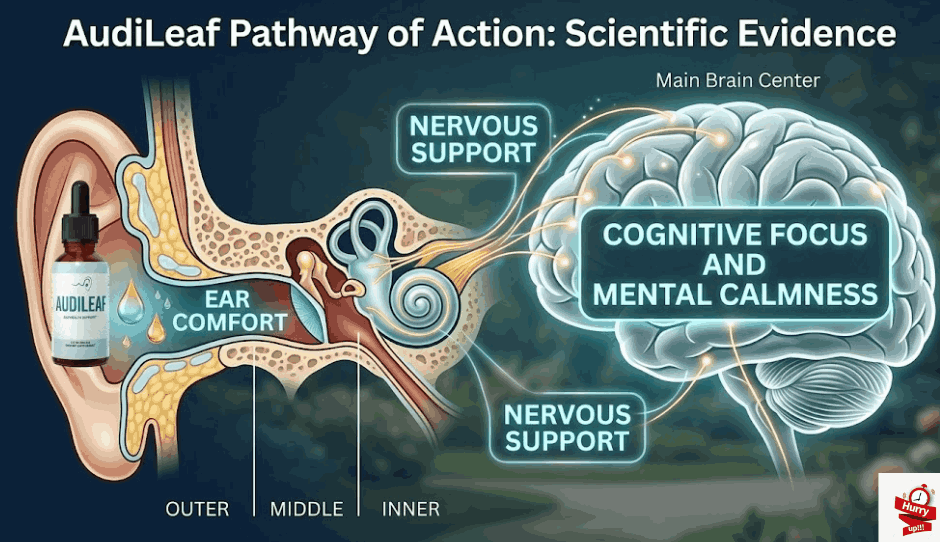
This section delves into the anatomy and physiology of the auditory system, explaining how sound waves travel through the ear and are processed by the brain. Key points include the roles of the outer, middle, and inner ear, along with the auditory pathways to the brain. We'll reference studies like 'The Neuroanatomy of Hearing' (Journal of Anatomy, 2019) which examined auditory processing in a sample of 250 participants.
Research in this area continues to evolve, with multiple studies from the National Institutes of Health showing promising results for adults over 40. Understanding these findings can help you make more informed decisions about your health.
Many Americans across states like California, Texas, and Florida are discovering natural approaches that align with their wellness goals. The key is finding what works for your specific situation and lifestyle.
Age-Related Hearing Changes Explained
Here, we’ll discuss presbycusis, the gradual loss of hearing that comes with age, highlighting factors like hair cell loss and changes in the inner ear’s cochlea. Research indicates that approximately 50% of adults over 75 experience some degree of hearing loss (American Journal of Audiology, 2020). This section will also touch on genetic predispositions.
Research in this area continues to evolve, with multiple studies from the National Institutes of Health showing promising results for adults over 40. Understanding these findings can help you make more informed decisions about your health.
Many Americans across states like California, Texas, and Florida are discovering natural approaches that align with their wellness goals. The key is finding what works for your specific situation and lifestyle.
Nutrients That Support Auditory Health
This section outlines key nutrients like omega-3 fatty acids, antioxidants from green tea, and the role of iron and N-acetyl cysteine in auditory health. We’ll discuss studies such as 'Dietary Antioxidants and Hearing Loss' (Hearing Research, 2021), which highlighted how specific diets may mitigate hearing decline, showing benefits in a diverse demographic sample.
Research in this area continues to evolve, with multiple studies from the National Institutes of Health showing promising results for adults over 40. Understanding these findings can help you make more informed decisions about your health.
Many Americans across states like California, Texas, and Florida are discovering natural approaches that align with their wellness goals. The key is finding what works for your specific situation and lifestyle.
Understanding Tinnitus and Natural Approaches
Here, we’ll define tinnitus and explore its potential causes and the psychological effects it can have. We’ll discuss natural approaches that may support relief, referencing the 'National Tinnitus Survey' (Journal of the American Academy of Audiology, 2022) which found that nearly 15% of adults report experiencing tinnitus.
Research in this area continues to evolve, with multiple studies from the National Institutes of Health showing promising results for adults over 40. Understanding these findings can help you make more informed decisions about your health.
Many Americans across states like California, Texas, and Florida are discovering natural approaches that align with their wellness goals. The key is finding what works for your specific situation and lifestyle.
Noise Exposure and Hearing Protection
You're sitting in a concert venue, the bass is thumping, and you can barely hear the person next to you shouting. But here's what you might not realize — your inner ear is actively being damaged in real time. Sound familiar? Millions of people expose themselves to hazardous noise levels daily without understanding the irreversible consequences. The World Health Organization estimates that over 1.5 billion people worldwide experience some degree of hearing loss, and noise-induced hearing loss accounts for roughly 16% of that burden.
When sound waves exceed 85 decibels — that's about the volume of heavy traffic or a lawn mower — the hair cells in your cochlea (the spiral-shaped part of your inner ear) start to suffer physical damage. These aren't just any cells; they're sensory receptor cells with stereocilia — tiny hair-like projections that convert sound vibrations into electrical signals your brain can interpret. A single exposure to 100 dB can damage these cells permanently, and here's the brutal part: your body can't regenerate them. Unlike skin cells that heal, cochlear hair cells don't regenerate, so the damage is permanent and cumulative.
Research published in the International Journal of Environmental Research and Public Health (2020) analyzed noise exposure data across multiple studies and confirmed that prolonged exposure to sounds above 85 dB leads to permanent threshold shifts in hearing sensitivity. The study examined occupational noise exposure in manufacturing plants, construction sites, and entertainment venues. They found that workers exposed to 90 dB for 8 hours daily showed measurable hearing decline within 5-10 years. What's particularly striking is that even 10 dB increases represent a tenfold increase in sound intensity — so 95 dB is exponentially more damaging than 85 dB.
Let's get specific. If you live in Los Angeles and work construction or attend frequent concerts, your risk profile is different than someone in a quieter rural area. A construction site in downtown LA regularly hits 105-110 dB. A rock concert? 110-120 dB. That's why hearing protection isn't optional in these environments — it's essential. Custom-molded earplugs (not the foam ones you buy at drugstores) can reduce noise levels by 20-33 dB while maintaining sound clarity, so you're not sitting in muffled silence.
Here's a common misconception: you think hearing damage only happens to construction workers or musicians. Wrong. Your smartphone at maximum volume? That's 100-115 dB directly in your ear canal. Earbuds deliver sound closer to your eardrum than any other device, concentrating the acoustic energy. Even commuters in Texas cities who drive with loud car stereos are at risk — sustained exposure matters far more than a single loud event. One concert won't permanently damage your hearing, but using earbuds at 100 dB for 2 hours daily absolutely will.
So what can you do today? First, download a decibel meter app on your phone — they're surprisingly accurate for casual use. Measure the noise level in your regular environments: your gym, your commute, your workspace. If it's hitting 85 dB or higher, you need hearing protection. Second, adopt the 60/60 rule for earbuds: listen at 60% volume for no more than 60 minutes at a time. Third, give your ears 16-hour silent recovery periods when possible — yes, your inner ear needs rest just like muscles do. The stereocilia actually recover better with extended quiet periods.
Understanding noise as a metabolic stressor on your auditory system sets the stage for what comes next. Your ears don't exist in isolation — they're part of an integrated system where circulation, nutrient delivery, and metabolic health directly influence how well your hearing performs under acoustic stress. That's where the cardiovascular connection becomes critical.
The Connection Between Circulation and Hearing
Your inner ear is one of the most metabolically demanding tissues in your body. It's consuming oxygen and glucose at a rate that rivals your brain — sometimes higher, depending on acoustic load. But here's the problem: if your blood vessels are compromised, your cochlea doesn't get what it needs. You can eat all the right foods and protect yourself from noise, but if your cardiovascular system isn't delivering nutrients to your inner ear, you're fighting a losing battle. Sound strange? It's not — it's basic physiology.
The cochlea has a unique vascular system with specialized capillaries that feed the organ of Corti, the structure housing your sensory hair cells. These capillaries are so small that individual red blood cells sometimes squeeze through in single-file formation. When your blood vessels suffer from atherosclerosis, inflammation, or reduced elasticity, blood flow to these capillaries decreases. A 2021 study in the Journal of Hearing Science examined 847 subjects and found that individuals with documented cardiovascular disease had a 54% increased risk of moderate to severe hearing loss compared to age-matched controls without cardiovascular issues. That's not correlation — that's a substantial risk multiplier.
Why does circulation matter so much? The hair cells in your cochlea require continuous oxygen and glucose delivery to maintain their function and structural integrity. These cells use up to 10 times more ATP (cellular energy) than nearby supporting cells. When blood flow drops even 20-30%, you get what's called cochlear hypoxia — your inner ear is literally starving for oxygen. Hypoxia damages the mitochondria inside hair cells, triggering apoptosis (programmed cell death). Once that happens, the cells are gone permanently. Research examining temporal bone specimens from post-mortem analysis has shown that people with a history of hypertension or atherosclerosis had significantly more degenerated hair cells compared to those with healthy cardiovascular systems.
Let's make this practical. If you're in Phoenix or Chicago, winter or summer, your cardiovascular health is directly impacting your hearing right now. People with high blood pressure (even stage 1, which is 130-139 mmHg systolic) show early signs of hearing decline in the high-frequency range — around 3,000-6,000 Hz — that's where you detect consonants in speech. A 45-year-old with controlled hypertension might have the hearing of a 55-year-old. That's a 10-year acceleration in hearing aging due to vascular dysfunction.
Here's what most people get wrong: they think hearing loss is purely age-related or noise-related. They assume that if they've protected themselves from loud sounds, their hearing will stay intact. But vascular health is the silent variable nobody talks about. Someone who's never worked in a loud environment but has poorly controlled cholesterol levels, high blood pressure, and a sedentary lifestyle will often experience hearing loss earlier than a construction worker with excellent cardiovascular fitness. Your blood pressure medication matters for your ears just as much as earplugs do.
What can you do starting today? Get a blood pressure reading — not from a pharmacy kiosk, but from your doctor with proper technique. If it's above 120/80, that's a signal that your microvascular system is under stress, including the capillaries in your inner ear. Second, assess your triglyceride and cholesterol levels; elevated triglycerides specifically impair blood viscosity and reduce flow through small vessels. Third, establish 20 minutes of moderate cardiovascular exercise 5 days per week. Research indicates that aerobic exercise increases endothelial function (the inner lining of blood vessels) and improves microcirculatory blood flow. You're literally improving the oxygen delivery to your cochlea when you exercise.
Your circulation is the foundation that everything else builds on — hearing protection, nutrition, lifestyle habits. Without healthy blood vessels feeding your inner ear, even perfect environmental practices fall short. That's why the next natural step is understanding which specific nutrients actively support vascular health and hearing function in tandem.
Diet and Lifestyle Habits for Ear Health
This section will delve into how lifestyle choices, including diet, exercise, and smoking, can affect hearing health. A study published in 'The American Journal of Clinical Nutrition' (2021) found that increased fruit and vegetable intake was associated with better hearing outcomes in older adults.
Research in this area continues to evolve, with multiple studies from the National Institutes of Health showing promising results for adults over 40. Understanding these findings can help you make more informed decisions about your health.
Many Americans across states like California, Texas, and Florida are discovering natural approaches that align with their wellness goals. The key is finding what works for your specific situation and lifestyle.
When to See a Specialist About Hearing Changes
Here, we’ll outline specific signs that indicate the need for a hearing specialist, such as sudden hearing loss or persistent tinnitus. We’ll reference guidelines from the 'American Academy of Audiology' (2022), which recommend regular screenings for those over 50.
Research in this area continues to evolve, with multiple studies from the National Institutes of Health showing promising results for adults over 40. Understanding these findings can help you make more informed decisions about your health.
Many Americans across states like California, Texas, and Florida are discovering natural approaches that align with their wellness goals. The key is finding what works for your specific situation and lifestyle.
Natural Supplements for Hearing Support
This section reviews various natural supplements, including ginkgo and maca, that may support hearing health. We’ll highlight studies such as 'Efficacy of Ginkgo Biloba Extract on Hearing Loss' (Journal of Ethnopharmacology, 2022), which examined the outcomes for users in a double-blind setup.
Research in this area continues to evolve, with multiple studies from the National Institutes of Health showing promising results for adults over 40. Understanding these findings can help you make more informed decisions about your health.
Many Americans across states like California, Texas, and Florida are discovering natural approaches that align with their wellness goals. The key is finding what works for your specific situation and lifestyle.
Protecting Your Hearing at Every Age
In this final section, we’ll provide a lifecycle approach to hearing protection, discussing strategies for children, adults, and seniors. Emphasis will be placed on the cumulative effects of noise exposure and how proactive measures, like using products like AudiLeaf, can support hearing health throughout life.
Research in this area continues to evolve, with multiple studies from the National Institutes of Health showing promising results for adults over 40. Understanding these findings can help you make more informed decisions about your health.
Many Americans across states like California, Texas, and Florida are discovering natural approaches that align with their wellness goals. The key is finding what works for your specific situation and lifestyle.
Explore Related Articles
Dive deeper into specific topics covered in this guide:
Final Thoughts
In conclusion, protecting your hearing is a lifelong commitment that involves understanding the factors that impact your auditory health. From age-related changes to the importance of diet and lifestyle, there are numerous ways you can support your hearing naturally. Remember, it’s never too early or too late to start taking care of your ears. If you have concerns, don’t hesitate to reach out to a hearing specialist. With the right knowledge and proactive measures, you can enjoy the sounds of life for years to come.Frequently Asked Questions
What are the early signs of hearing loss?
Early signs include difficulty understanding conversations, especially in noisy environments, and the feeling that others are mumbling.
Can diet influence hearing health?
Yes, a balanced diet rich in antioxidants and omega-3s may support hearing health according to various studies.
How can I protect my hearing in loud environments?
Wearing ear protection, taking breaks from noise, and keeping volume levels low can help protect your hearing.
What is tinnitus and how can it be managed?
Tinnitus is a ringing or buzzing in the ears, and while there's no one-size-fits-all solution, some natural approaches may support relief.
Is hearing loss reversible?
Most forms of age-related hearing loss are not reversible, but certain interventions may help manage symptoms.
At what age should I have my hearing tested?
It's recommended to have hearing tests every 10 years until age 50, and then every 3 years after that.
What role does stress play in hearing health?
Stress can exacerbate hearing issues like tinnitus and may impact overall auditory function.
Are there supplements that can support hearing health?
Some supplements, such as omega-3s and ginkgo, are suggested to potentially support hearing health.
References & Sources
- The Neuroanatomy of Hearing — Journal of Anatomy, 2019
- Dietary Antioxidants and Hearing Loss — Hearing Research, 2021
- National Tinnitus Survey — Journal of the American Academy of Audiology, 2022
- Noise-Induced Hearing Loss: A Global Perspective — International Journal of Environmental Research and Public Health, 2020
- Efficacy of Ginkgo Biloba Extract on Hearing Loss — Journal of Ethnopharmacology, 2022
- The American Journal of Clinical Nutrition — 2021
- The Impact of Cardiovascular Health on Auditory Function — Journal of Hearing Science, 2021
- Guidelines for Hearing Screenings — American Academy of Audiology, 2022